Astronomers Find Fastest Star Yet, Orbiting Milky Way's Black Hole
A newly discovered star named S301 whips around Sagittarius A* at nearly 8% of the speed of light, giving scientists a new tool to study gravity near a black hole.
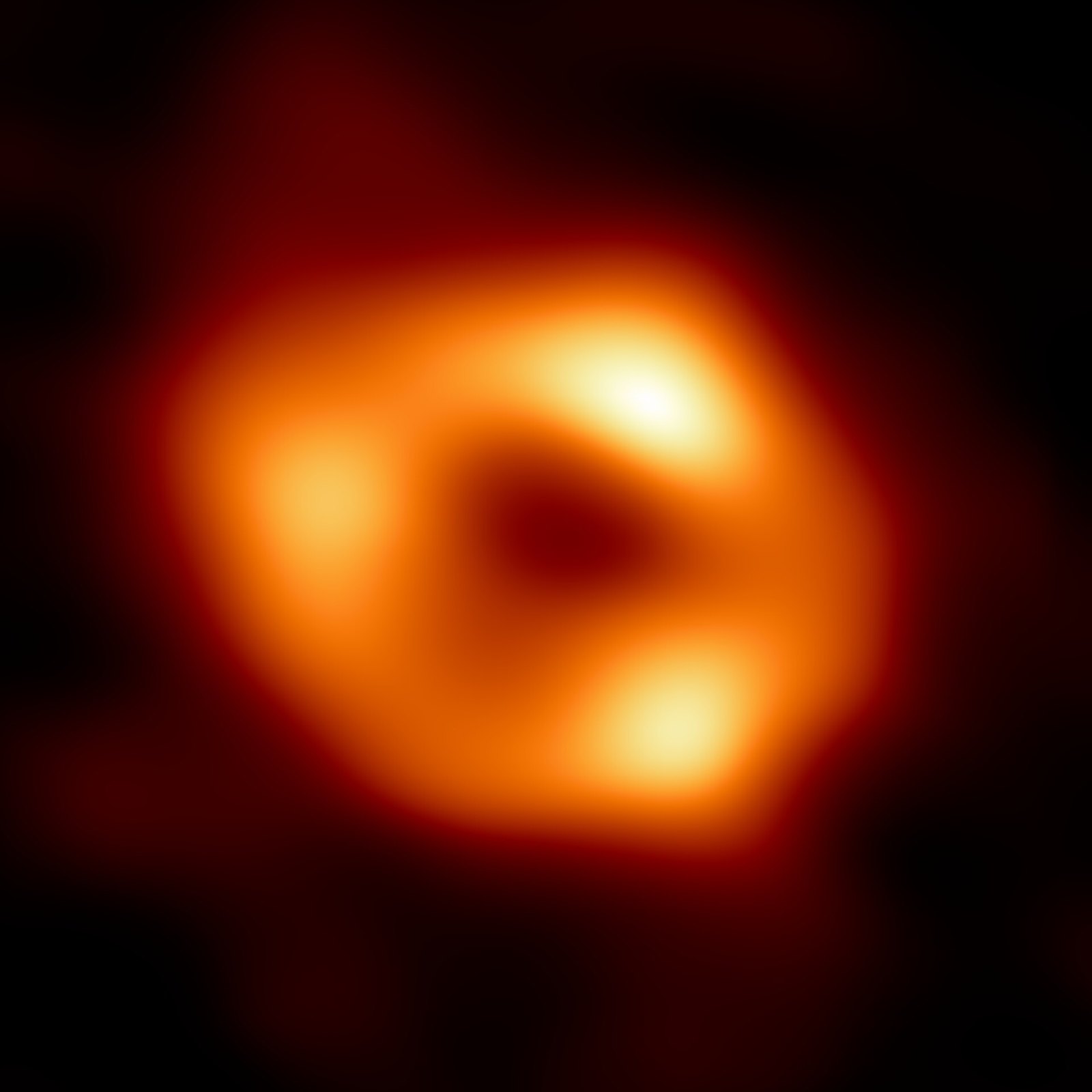
Astronomers have identified the fastest star ever observed in the Milky Way, a discovery that could help unlock long-standing mysteries about the supermassive black hole at the galaxy's center.
The findings, published Wednesday in the journal Nature, describe a star called S301 that races around Sagittarius A* — the black hole at the heart of our galaxy — reaching speeds over 15,000 miles per second, or nearly 8% of the speed of light. That makes it the fastest star ever recorded in the Milky Way.
"Thereby we can use the star [as a probe] to visualize how gravity is acting on space and time," said Stefan Gillessen, an astronomer at the Max Planck Institute for Extraterrestrial Physics in Germany and a co-author of the study.
The star was first spotted as "a small flicker of light, a very faint star" moving at unusually high velocity, according to Felix Mang, a Ph.D. student at the same institute who tracked S301's position over several years. Using Newton's law of gravity with a correction from general relativity, Mang determined the star follows a highly elongated, 8.7-year orbit, with the black hole positioned at one end.
The star accelerates as it approaches the black hole, reaches its top speed during a sharp turn around it, then decelerates as it flies back out to its farthest point before repeating the cycle. "Once you know the orbit, it's pretty much like the Swiss railway system. Things are there precisely on time," Gillessen said.
Researchers used four telescopes at the European Southern Observatory's Very Large Telescope site in Chile, gathering infrared light that can penetrate the dust and gas obscuring the galaxy's center.
Erin Kara, an astrophysicist at MIT who was not involved in the study, called it "a really exciting result" that could pave the way for measuring the spin of Sagittarius A* — something never before done for a quiescent, non-actively-feeding black hole. Such a measurement could offer clues about how the black hole formed and how it shaped the galaxy around it.
"What I love about black holes," Kara said, "is that they're both exotic and where our understanding of physics breaks down. And at the same time, they're really fundamental for explaining why our galaxy looks the way that it does."
This article was produced with the assistance of artificial intelligence (AI), in accordance with our editorial policy.