Total Solar Eclipse Sweeps Across the North Atlantic
The Aug. 12 eclipse turns day to night over Greenland, Iceland, Spain, Portugal and northern Russia, while much of the northern U.S. sees a partial eclipse.
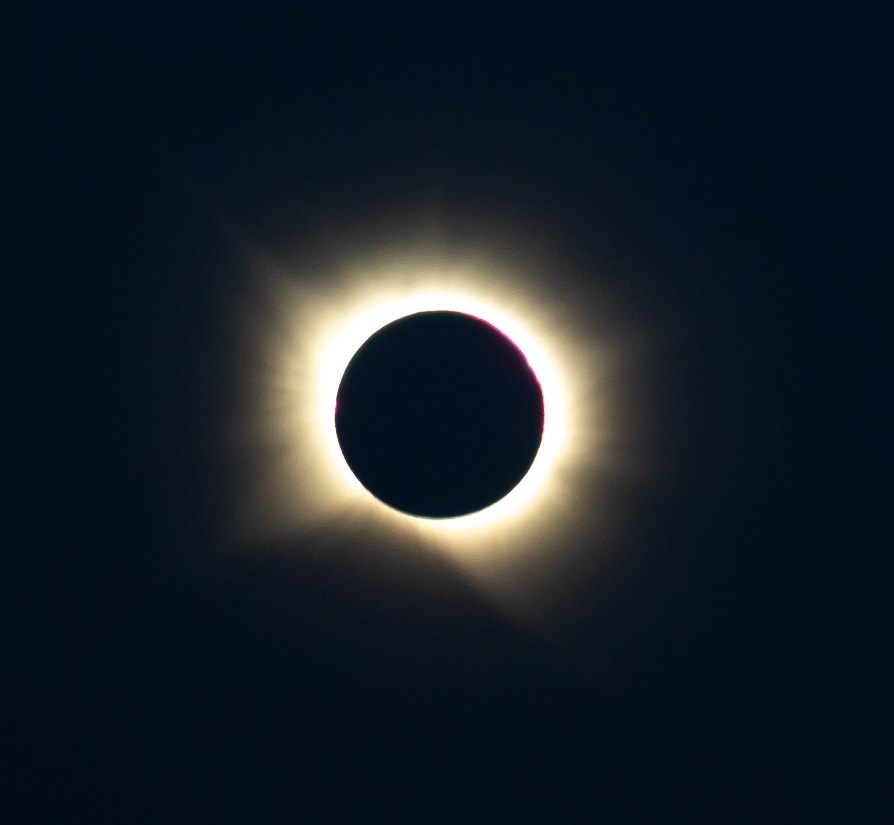
A total solar eclipse crossed parts of the Northern Hemisphere on Wednesday, giving millions of skywatchers in the path of totality a view of one of the year's biggest celestial events.
The Aug. 12 eclipse was visible in parts of Greenland, Iceland, Spain, Portugal and Russia, according to NASA. People in parts of the United States saw only a partial solar eclipse.
NASA said the path of totality — the narrow band where the moon completely covers the sun, briefly turning daytime skies dark — stretched across Greenland, Iceland, the Atlantic Ocean, Spain, a small corner of Portugal and northern Russia.
What the U.S. saw
Parts of the northern United States, from Alaska to North Carolina, experienced a partial eclipse, with the timing and the share of the sun covered varying by location.
In Anchorage, Alaska, the partial eclipse began at 7:36 a.m. local time and reached its maximum at 8:21 a.m., with about 28% of the sun covered. In New York City, it began at 1:07 p.m. and peaked at 1:54 p.m., with about 9% coverage. Other cities in the viewing area included Boston, Philadelphia, Washington, D.C., Detroit, and Portland and Bangor, Maine.
Eye safety
NASA says anyone watching a partial solar eclipse must wear certified solar eclipse glasses or use a handheld solar viewer meeting the ISO 12312-2 international safety standard. Regular sunglasses are not safe.
The only time it is safe to look at the sun without certified glasses is during totality, the agency says. Because the Aug. 12 eclipse was partial everywhere in the United States, viewers were advised to keep their glasses on for the entire event.
The next one
A solar eclipse occurs when the moon passes between Earth and the sun, casting a shadow that fully or partially blocks the sun.
The last total solar eclipse visible from the United States was on April 8, 2024, when the path of totality crossed 15 states from Texas to Maine. The next one visible from any part of the country will come on March 30, 2033, with totality only in Alaska. The contiguous United States will not see another until Aug. 23, 2044, followed by a coast-to-coast total eclipse on Aug. 12, 2045.
This article was produced with the assistance of artificial intelligence (AI), in accordance with our editorial policy.