Snails Make Five Kinds of Slime, Researchers Find
A study in Science reports that the brown-lipped snail tunes proteins and calcium to produce five distinct mucuses, a recipe that could inspire wound sealants and drug delivery materials.
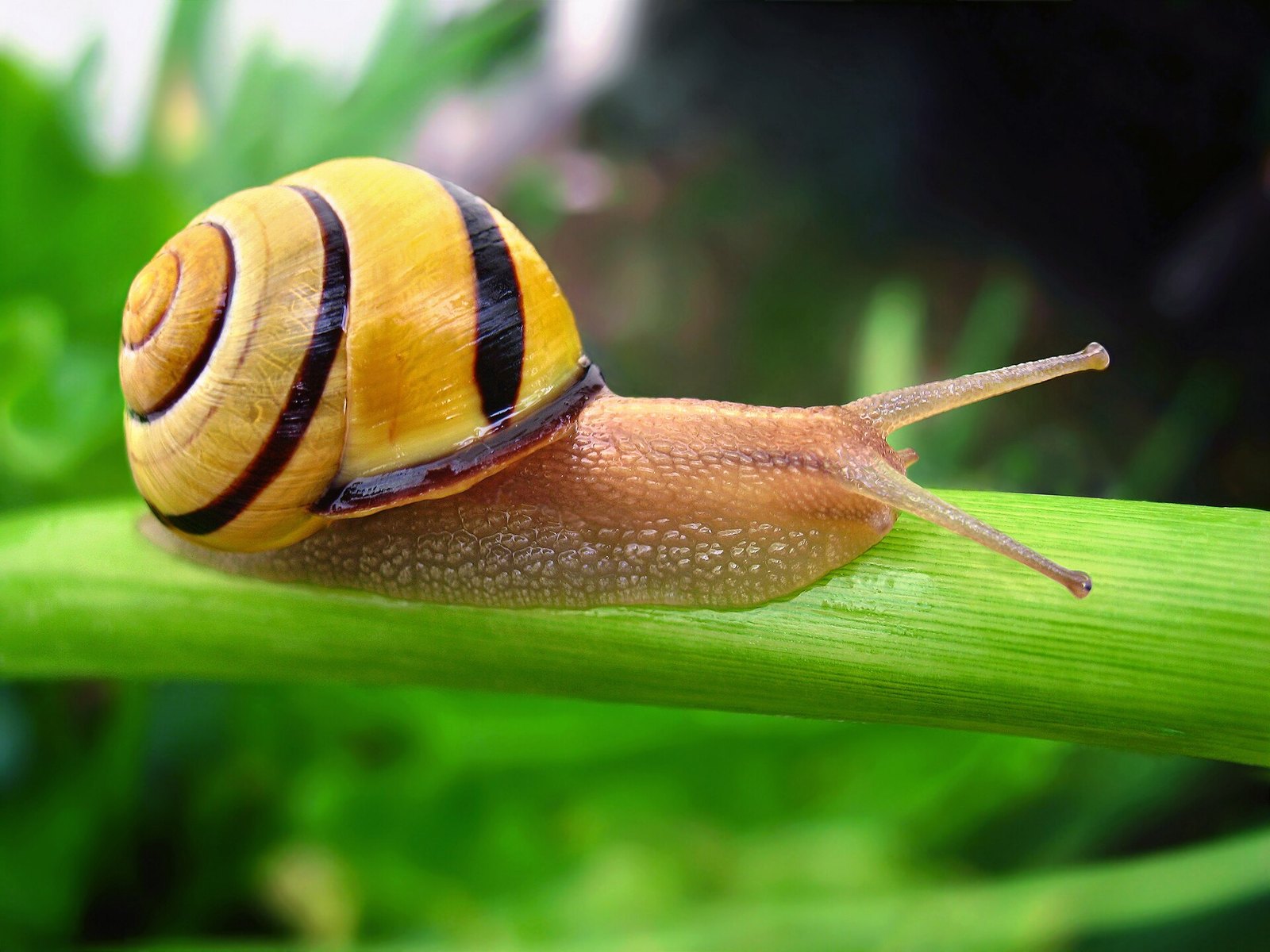
Researchers in Germany have found that a common European garden snail produces five chemically distinct kinds of mucus — each with its own job — by adjusting the proportions of the same basic ingredients.
The study, published in the journal Science, examined Cepaea nemoralis, the brown-lipped snail, a species native to central Europe. The team reported that the snails tune the relative amounts of certain proteins and ions to create mucuses with sharply different mechanical properties.
"Snail slime specifically is fascinating — a natural work of art," said Mariella Gabler, a Ph.D. student in physical chemistry at the Max Planck Institute of Colloids and Interfaces. "The complexity and functionality are mesmerizing."
One mucus is a lubricant that is both sticky and slippery, letting the snail cling to a surface while gliding with minimal friction. Two are defensive: a foam that washes out small pests, and a sticky glue that immobilizes them. A fourth is a protective mucus the snail uses to seal itself inside its shell over the winter. The fifth is an adhesive that allows it to cling to wood, glass and aluminum.
Gabler and her colleagues collected snails on rainy days just outside their institute and fed them cucumbers, salad and lichen. She gathered the adhesive and protective mucuses with thin tweezers and collected the lubricant as the animals moved across a wet glass bowl. For the defensive varieties, she tickled the snails and scooped up the result with a small spoon-tipped spatula.
Analysis showed all five mucuses contain similar proteins at different concentrations, combined with distinct amounts of calcium and other ions and differences in how they are secreted. "The more collagen and calcium were present, the stiffer, more cohesive and sticky mucus became," Gabler said. The protective mucus contains tiny calcite crystals that make it hard and brittle — "a perfect mechanical barrier during hibernation."
Kausik Mukhopadhyay, a materials scientist at the University of Central Florida who was not involved in the work, said the findings could feed into cancer research, drug delivery and cosmetics. He said the lubricant mucus could be adapted for catheters, and the adhesive for closing wounds.
"Nature is always smarter than us," he said.
This article was produced with the assistance of artificial intelligence (AI), in accordance with our editorial policy.