Schools in Three States Deploy Pepper-Spray Drones
Mithril Defense says its Campus Guardian Angel drones can find an active shooter within 15 seconds, as some parents and researchers question the approach.
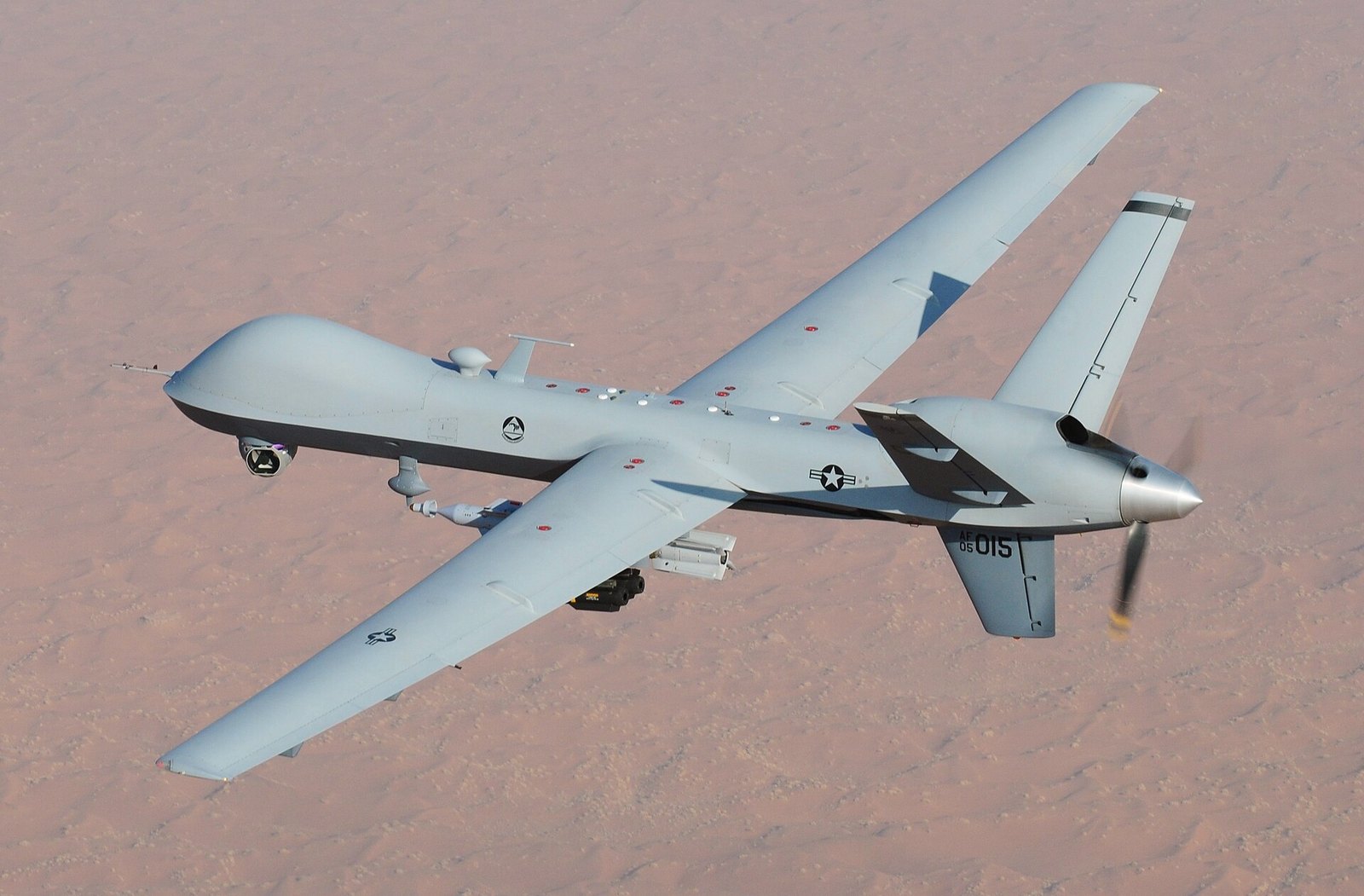
Schools in Colorado, Florida and Georgia will open the new academic year with drones equipped with pepper gel, sirens and strobe lights that their manufacturer says can be turned on an active shooter within seconds.
They are the first schools to install drones made by Mithril Defense, which has been testing whether the devices can work alongside law enforcement to stop school shooters more effectively than a police response alone.
The drones fly through hallways at speeds of up to 50 miles per hour, guided by pilots at Mithril's headquarters in Austin, Texas, with the goal of locating a shooter within 15 seconds, CEO Justin Marston told CBS News. They are designed to overwhelm an assailant with sirens, strobe lights and pepper gel. As a last resort, Marston said, a drone can ram a shooter at 60 miles per hour.
Housed in secure boxes inside school buildings, the drones can launch within seconds — a feature Marston called critical, since most school shootings end within two to three minutes. They can also enter rooms ahead of officers. "An officer should never have to risk their life doing something that a drone can do, because we don't care if the drone gets shot. It's a lump of plastic," he said. "But an officer's life is irreplaceable."
The systems, called Campus Guardian Angel, cost about $20,000 a year for an 80,000-square-foot school — less than hiring a security officer, Marston said. Five districts in Georgia and three in Florida are being funded by their states. The Colorado school, a public charter called the John Adams Academy, is using private money after the county backed away from $200,000 in funding.
Some parents objected. "What about a drone spewing these pellets and hurting a kid?" parent Jennifer Iversen told CBS Colorado. "It brings in so many ethical and legal issues."
American schools spend about $4 billion a year hardening facilities, according to the Learning Policy Institute. Senior researcher Jennifer DePaoli wrote in April that research "overwhelmingly" shows students' psychological sense of safety matters as much as physical security. Marston said the two aren't mutually exclusive, comparing drones to fire sprinklers.
Louisiana recently passed a law funding a drone pilot program in four schools. School shootings peaked at 352 incidents in 2023 before easing, according to the K-12 School Shooting Database.
This article was produced with the assistance of artificial intelligence (AI), in accordance with our editorial policy.