Climate Extremes Squeeze Malaysian Durian Growers
Orchard owner Stephen Chow says he expects a loss this year as heat, erratic rain and falling prices collide with Malaysia's push into a $7.5 billion Chinese import market.
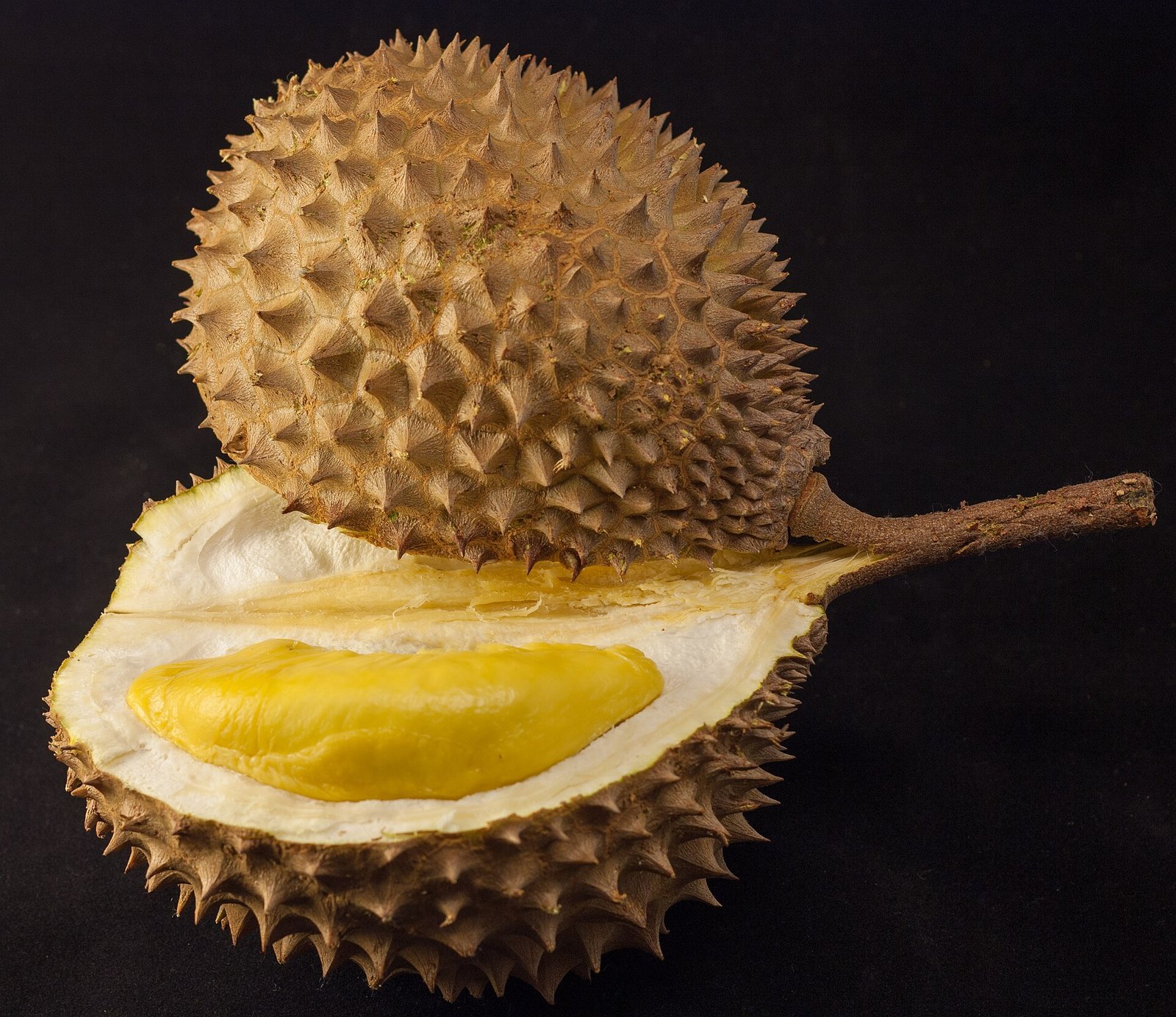
KARAK, Malaysia — Malaysian durian growers are struggling to stay profitable even as China's appetite for the pungent fruit reaches record levels, with extreme weather driving up costs and an oversupply at home cutting prices in half.
At Stephen Chow's orchard in Karak, about an hour's drive from Kuala Lumpur, workers spend hours in the fields at night, wearing headlamps to collect freshly ripened fruit.
"Breaking even would already be very good. Most likely there'll be a loss this year," Chow said.
Extreme weather has hit his orchard repeatedly. Heavy rainfall in 2021 triggered flooding that damaged about 100 durian trees and his machinery. Over the following three years, persistent rain during flowering season caused pollination failure and cut into his yield.
Between February and April, afternoon temperatures reached 91 to 95 degrees Fahrenheit (33 to 35 degrees Celsius), with rain falling mostly at night, Chow said. He pruned to prevent deformed or small fruit and stepped up watering and fertilization because of the heat — but higher fuel and fertilizer prices tied to the Iran war raised his costs.
An oversupply in Malaysia, driven by hot, dry weather and more orchards reaching maturity, pushed prices down. Grade A Musang King from his orchard sold for the equivalent of $8.60 per kilogram (about 2.2 pounds) in early July — roughly half the price of a year earlier and about a third of the 2024 peak.
Malaysia's durian crop covered 227,600 acres (92,100 hectares) in 2024, up almost 40% from 2016 and larger than the total land area of Singapore, official data showed. Production grew nearly 90% over that period, to 568,800 tonnes.
The boom followed China's decision to import whole frozen Malaysian durians in 2019, with fresh fruit allowed in 2024 under what has been dubbed "durian diplomacy." The U.N. Food and Agriculture Organization said China took about 95% of global durian exports between 2020 and 2022. Chinese customs data show 1.87 million tonnes of fresh durians worth $7.5 billion imported in 2025, six times the volume of a decade ago.
"It feels like celebrating Lunar New Year every time I have a durian," said Song Xiaohua, a Shanghai resident in her 30s.
Malaysia trails Thailand and Vietnam in exports to China but promotes higher quality, harvesting only naturally ripened fruit.
Peninsular Malaysia's average temperature rose about 0.43 degrees Fahrenheit (0.24 Celsius) per decade from 1969 to 2025, the country's meteorological department said. Ooi Teik Hock, a grower in Perak, moved his orchard to the highlands about a decade ago for cooler nights. He said pesticide prices have risen roughly 30% in three years, and that this year, for the first time, he saw no fruit bats — a main pollinator — during flowering season.
Lim Chin Khee, an adviser to the Durian Academy, said Musang King is especially weather-sensitive, and urged farmers to expand reservoirs or prepare tube wells.
This article was produced with the assistance of artificial intelligence (AI), in accordance with our editorial policy.