Astronomers Find New Object They Call a 'Black Hole Star'
A U.S.-led team using the James Webb Space Telescope says the object, dating to 660 million years after the Big Bang, may explain the puzzling "little red dots" seen in the early universe.
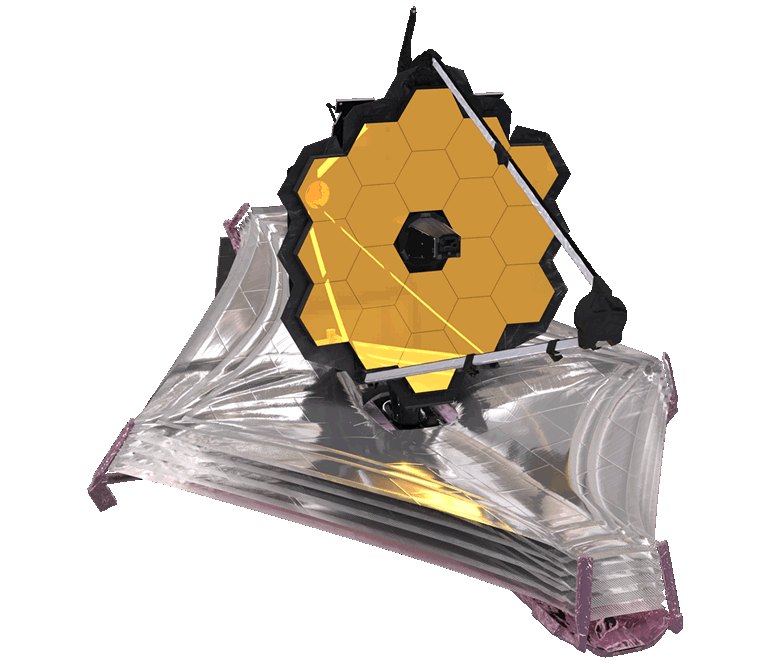
Astronomers announced Wednesday that they have discovered a new type of astronomical object they are calling a "black hole star," a finding that may resolve one of the biggest puzzles raised by the James Webb Space Telescope.
The object appears to be a star roughly the size of our solar system, but it produces 100 billion times more energy than any star — an output closer to what a black hole generates. It dates from 660 million years after the Big Bang and was spotted by a U.S.-led team using Webb, according to a study published Wednesday in the journal Nature.
Since the telescope went online in 2022, it has repeatedly detected extremely bright objects in the early universe that scientists have nicknamed "little red dots."
"What exactly these objects are has been one of the most debated topics of the JWST era," said lead author Rohan Naidu of the University of Hawaii.
The team had been investigating a different question — why Webb keeps finding large, bright galaxies so early in cosmic history — when it noticed a little red dot in the images.
"When we see something very red in the universe, we often assume that it is surrounded by dust, like soot or ash," said co-author Robert Simcoe of the Massachusetts Institute of Technology. He compared it to Canadian wildfire smoke making the sky over Boston look red.
But at certain wavelengths, the object's light disappeared entirely — evidence that hydrogen gas, not dust, was responsible for the color. That did not explain the energy.
"You can't be powering this by nuclear fusion, which is the energy source that sits at the heart of all the stars," Naidu said.
Modeling simulations pointed to a central black hole wrapped in a cocoon of gas, giving it the look of a star. The team named it MoM-BH*-1, with the number implying more await discovery. "Every little red dot is consistent with being a black hole star," Naidu said, adding that in this case the object is "essentially completely outshining its surrounding host galaxy."
Separately, astronomers said Tuesday that Webb detected oxygen-rich dust and, for the first time, water around the star IRS 3, just 0.55 light-years from Sagittarius A*, the Milky Way's supermassive black hole. "Dust production remains remarkably resilient," said lead author Florian Peißker of the University of Cologne.
This article was produced with the assistance of artificial intelligence (AI), in accordance with our editorial policy.