Uranium Mill Expansion in Utah Stirs Tribal Health Fears
As the U.S. races to boost domestic uranium supply, the nation's only conventional uranium mill is ramping up production near the White Mesa Ute Community, reviving old fears about contamination.
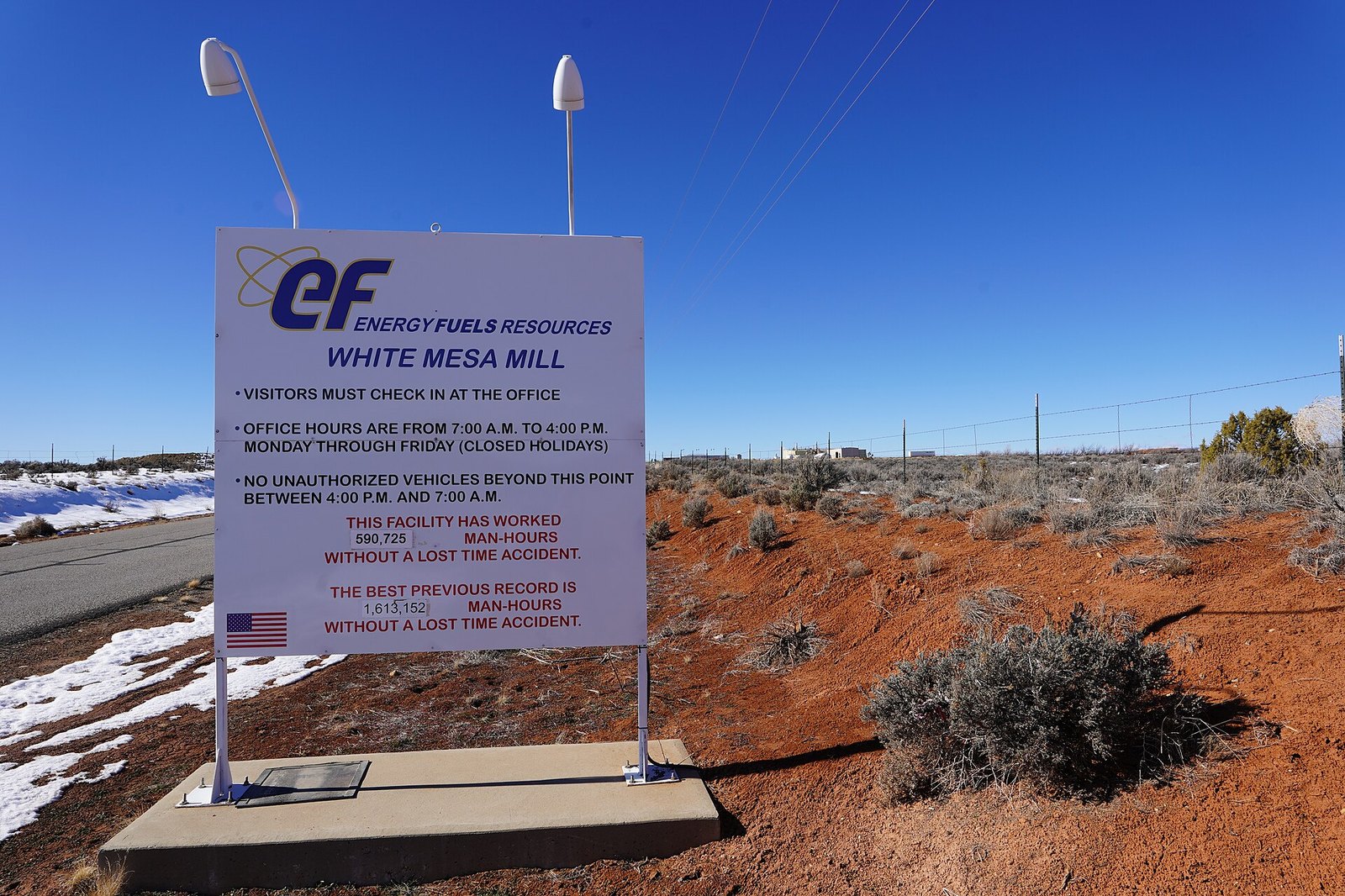
White Mesa Mill, the nation's only remaining conventional uranium mill, is scaling up production as the federal government pushes to revive domestic uranium supplies — and members of the Ute Mountain Ute Tribe living just miles away say their long-standing health concerns are being overlooked.
The mill, built in 1980 near what is now Bears Ears National Monument in southeastern Utah, produces yellowcake for nuclear fuel. A 2024 federal law banning Russian uranium imports by 2028, combined with President Trump's goal to quadruple U.S. nuclear capacity by 2050, has intensified pressure to expand domestic mining and milling. Trump has ordered federal agencies to prioritize mining on federal lands and fast-track project approvals; one Utah mine, Velvet-Wood, cleared federal environmental review in just 11 days, leaving local tribes only a week to weigh in.
That urgency has brought a steady stream of ore trucks to White Mesa Mill from regional mines, including one near the Grand Canyon on Havasupai land, with routes running through the Navajo Nation. The mill also plans to expand its waste storage.
Malcolm Lehi, a former tribal councilmember, is part of a growing coalition of Ute Mountain Ute, Havasupai and Navajo members opposing the mill, citing fears that toxic wastewater could contaminate groundwater for generations. Yolanda Badback, who leads the White Mesa Concerned Community advocacy group, said she watches uranium trucks pass her home daily with a sense of resignation.
Energy Fuels, which has owned the mill since 2012, says contamination is contained. Curtis Moore, the company's senior vice president of marketing and corporate development, said the mill produced 1 million pounds of yellowcake last year and plans to more than double that this year. The company has also begun processing radioactive waste from as far as Estonia and Japan and received a $725 million conditional Defense Department loan to expand rare-earth element processing, a business Moore said could create 100 permanent jobs.
Moore acknowledged tribal distrust rooted in the mid-20th-century uranium boom, when miners — many of them Navajo — were exposed to dangerous radiation levels without adequate warning, leaving behind hundreds of contaminated sites. He said today's workers are exposed to only 15% to 20% of allowable radiation limits, and levels outside the mill are "effectively zero." Officials say the mill's deep aquifer water supply, protected by a thick rock barrier, shows no evidence of contamination, though Scott Clow, the tribe's environmental programs director, said the aquifer does have naturally occurring issues like arsenic and manganese, and the filtered public water supply remains safe.
This article was produced with the assistance of artificial intelligence (AI), in accordance with our editorial policy.