Columnist: East Wing Demolition Is About Power, Not a Ballroom
Writing in The Guardian, Francine Prose says President Trump's 90,000-square-foot White House project follows an autocrat's playbook, days after an appeals court ruled he needs congressional approval to continue.
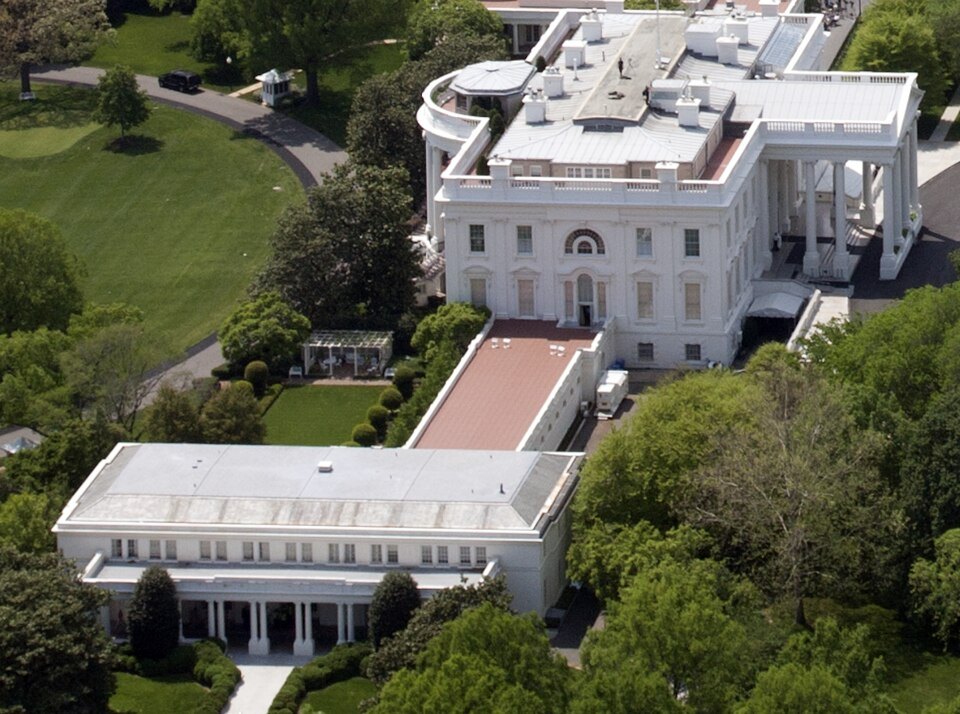
President Trump's demolition and rebuilding of the White House East Wing is less a construction dispute than a test of democratic norms, the novelist and essayist Francine Prose argues in a Guardian opinion column.
Prose, a former president of PEN American Center, writes that dictators and aspiring dictators have long favored "outsized structures, heroic arches, towers and columns" meant to outlast them. She cites Adolf Hitler studying a model of Linz in his Berlin bunker, the glass pyramid Enver Hoxha built in Tirana, Albania, where he is now buried, and the EUR district that Benito Mussolini's planners scaled for a "race of Fascist giants."
Against that backdrop, she writes, it is no surprise that Trump has spent heavily on a project that will occupy 90,000 square feet. Cost estimates have varied widely, she notes, with $400 million the most recent figure mentioned, and while the president has said taxpayers will not be stuck with the bill, some money has already been diverted from publicly funded agencies including the Secret Service. There has been little reporting, she adds, on who is receiving the contracts or what financial and personal ties those contractors have to the president.
The ballroom itself would take up 22,000 square feet. Trump has said the remaining 68,000 is "vital for National Security and Military Operations!" Beneath it, Prose writes, a six-story underground bunker would dwarf Hitler's 3,000 square feet. Trump has also discussed using the new roof as a launching pad for armed drones.
That came after the U.S. Court of Appeals for the District of Columbia Circuit ruled 2-1 that he could not continue the renovation without congressional approval. Judges Patricia Millett and Bradley Garcia wrote that "each president is a temporary tenant, not the owner, of the White House and its Executive Residence." The suit was brought by the National Trust for Historic Preservation, initially by board member and architectural historian Alison Hoagland, who called the ballroom an "aesthetic, cultural and historical" affront.
Trump has vowed to take the case to the Supreme Court.
This article was produced with the assistance of artificial intelligence (AI), in accordance with our editorial policy.